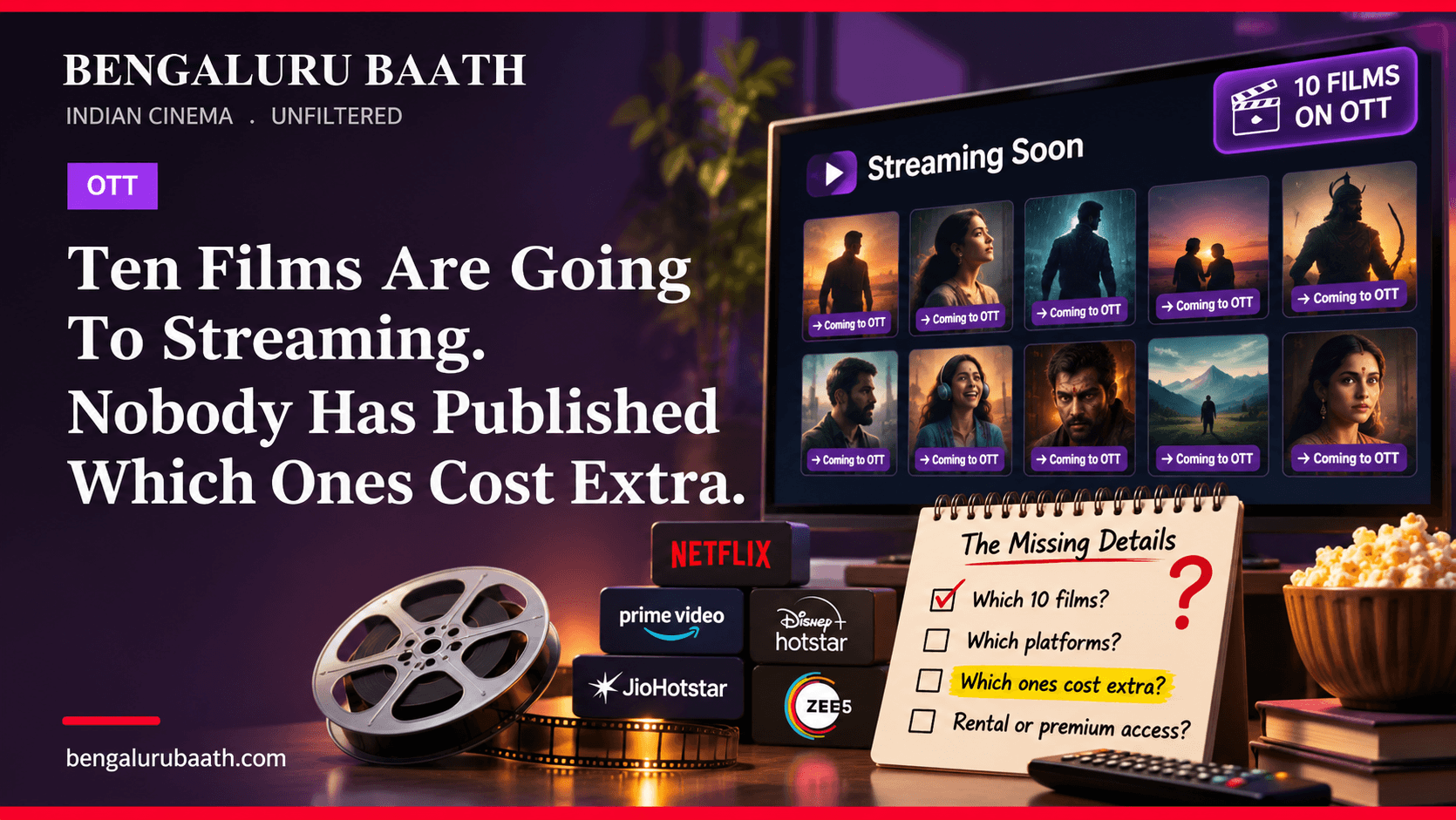
We tried to answer one question this week: for the ten Indian films currently listed as arriving on streaming platforms, which ones cost extra?
Not one outlet says. Across ten titles and eight platforms, no publication states whether a release is pay-per-view or included in a subscription. That is the single most useful fact about a streaming release and it is published nowhere.
Two consecutive empty weeks
We check eight platforms for business news every week: licensing, acquisitions, pricing, windows, rights deals. For the second week running, the tally is zero. No reported acquisition, no stated price, no window confirmed, no rights sale.
Streaming is now where the majority of Indian film revenue above a certain budget is settled, and the trade press covers it exclusively through release-date listicles.
The Ramayana contradiction
Here is how thin the ground is. Dil Raju has said Ramayana’s OTT rights are unsold. On 21 October, a report had the film going to JioHotstar on a pay-per-view basis.
Those cannot both be current. We are not resolving it, because resolving it would require one of the parties to say something on the record and neither has. But note what it means: the biggest Indian release of the year, which has crossed a thousand crore in India, has a streaming status that two reports describe incompatibly, a month apart, with no correction from anybody.
Why PPV versus subscription is the whole question
Because it decides who the film is for. A subscription release is a retention play: the platform pays for it to keep existing customers. A pay-per-view release is a transaction: the platform is selling the film again, at a second price, to people who already pay a monthly fee.
For a producer the two deals look nothing alike. For a viewer the difference is a bill. And for the theatrical window argument it is decisive, because a PPV release competes with cinemas in a way a subscription release does not.
Set that against what we have reported this month. A Hindi tentpole paid the full 56-day window the chains demanded. A Kannada film went to Prime Video on day 54 while still playing in Hubli. Both of those are window stories, and neither can be properly judged without knowing whether the streaming release was a sale or an inclusion.
And the regulatory side is just as quiet
TRAI’s recommendations on licensing apps that distribute linear television have been with the ministry since 26 October with no response. The CBFC’s 2 November advisory IS addressed to OTT platforms, and the pages that would let anybody check certification are returning a 403. The one live constitutional challenge touching this space will not be heard until January.
So the commercial terms are unreported and the regulatory terms are unresolved, at the same time, in the segment that now takes the largest share of film rights money in the country.
What we checked and did not find
Eight platforms’ own newsrooms and press pages, the weekly OTT listings from the outlets that publish them, and the trade press. The listings give titles and dates. They do not give price, basis, territory, or term. We found no outlet that has asked.
Bengaluru Baath Take
Ten Indian films are going to streaming in the next few weeks and nobody has published whether any of them costs extra to watch. The largest revenue line in Indian film is covered as a calendar.
The Ramayana contradiction is the giveaway. A thousand-crore film has two incompatible published accounts of its streaming status, a month apart, and no correction from either side, because nobody asked a question that would have required one.